





















What is the Ideal AMH Level to Get Pregnant? A Complete Guide
If you’ve recently received your AMH test results and feel a wave of worry, know that this is a completely valid response. Many women stare at that number wondering if motherhood is slipping out of reach. You are not alone, and that number is not the final word on your fertility story.
Your AMH level to get pregnant is just one piece of a larger picture. It does not decide whether you can become a mother. In this guide, you’ll learn what AMH measures, what the ideal levels look like, and what steps you can take towards pregnancy.
What is AMH and Why is It Important for Pregnancy?
AMH (Anti-Mullerian Hormone) is a hormone produced by the small follicles in your ovaries. It serves as a marker of your ovarian reserve, the estimated number of eggs remaining in your ovaries.
Here’s something important: AMH measures the quantity of your eggs, not the quality. A lower number indicates fewer eggs, but it does not tell you how healthy those eggs are. Your doctor may use AMH alongside other tests to understand your reproductive health.
What Is the Ideal AMH Level to Get Pregnant?
While there’s no single “perfect” number, fertility specialists generally use these ranges:
- Normal AMH: 1.0 to 3.0 ng/mL, typically suggesting a healthy ovarian reserve.
- Low AMH: Below 1.0 ng/mL, which may indicate fewer eggs but does not mean pregnancy is impossible.
- High AMH: Above 3.0 ng/mL, sometimes associated with PCOS (Polycystic Ovary Syndrome).
The normal AMH level to get pregnant varies from person to person. Your doctor will interpret results based on your age, health history, and fertility profile.
Also Read – How to Use the Prega News Pregnancy Test Kit?
Can You Get Pregnant with Low AMH?
Yes, you can. Here’s something important: AMH primarily predicts how your ovaries may respond to fertility treatments like IVF. It does not predict your ability to conceive naturally.
If you are ovulating regularly, you still have a real chance of conception each cycle. A woman in her early 30s with low AMH but regular ovulation still has healthy monthly opportunities to conceive.
Many women become low AMH pregnant naturally or with fertility support. A low AMH result is information, not a verdict.
Factors That Influence AMH Levels
Several factors can affect your AMH levels:
- Age: AMH naturally declines with age, with a noticeable drop after 35.
- Genetics: Family history can play a role in ovarian reserve.
- PCOS: Women with Polycystic Ovary Syndrome often have higher-than-normal AMH.
- Endometriosis: This condition may be associated with lower AMH levels.
- Previous ovarian surgery: Procedures involving the ovaries can reduce AMH levels.
AMH Levels by Age: What You Should Know
AMH levels naturally change throughout a woman’s life:
- In your 20s: AMH is typically at its highest, often above 3.0 ng/mL.
- In your early 30s: Levels may begin to decrease, usually remaining in the normal range.
- In your late 30s: A noticeable decline often occurs, potentially dropping below 1.5 ng/mL.
- In your 40s: AMH may fall significantly, often below 1.0 ng/mL.
A lower AMH at any age does not automatically mean you cannot conceive.
How AMH Levels Affect Your Fertility Journey

Your AMH results help your doctor plan the best approach:
- For IVF (In Vitro Fertilisation): AMH helps determine medication dosage and estimate egg retrieval numbers.
- For IUI (Intrauterine Insemination): AMH can help assess whether ovulation induction may be beneficial.
- For natural conception: If AMH is healthy and you’re ovulating regularly, your doctor may recommend timed intercourse and lifestyle adjustments.
How to Test AMH Levels
Testing your AMH involves a simple blood test that can be done on any day of your menstrual cycle. Results are typically available within a few days.
If you’re planning to start a family, discussing AMH testing with your doctor can be a proactive first step.
Ways to Improve Your Chances of Pregnancy with Low AMH
If your AMH levels are on the lower side, here is a practical roadmap:
1. Get a Complete Fertility Assessment
AMH alone doesn’t give the full picture. Ask your doctor about additional tests such as FSH (Follicle Stimulating Hormone) and an AFC (Antral Follicle Count) scan to create a personalised plan.
2. Track Your Ovulation Accurately
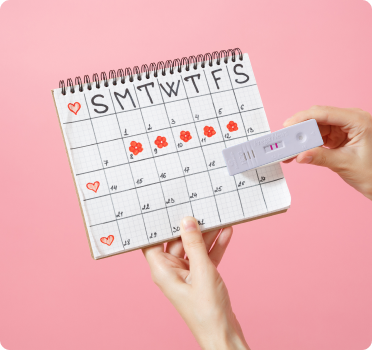
Knowing when you ovulate helps you time intercourse during your fertile window. An ovulation detection kit like Ova News can identify your 5 most fertile days in just 5 minutes. You can also use the PregaNews Ovulation Calculator for cycle tracking.
3. Nourish Your Body with the Right Nutrients
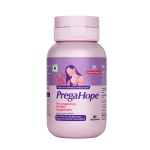
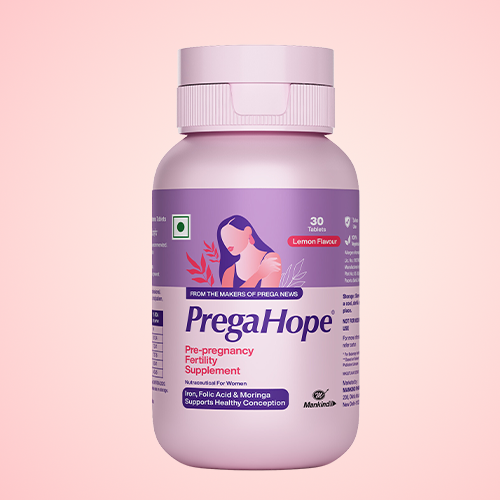
A pre-pregnancy fertility supplement like Prega Hope is designed to promote healthy ovulation with key nutrients such as iron, folic acid, and zinc that support reproductive health.
4. Adopt a Healthy Lifestyle
A balanced diet, regular activity, stress management, and adequate sleep contribute to better reproductive health. Avoiding smoking and limiting alcohol are also recommended.
Common Myths About AMH and Pregnancy
Several misconceptions about AMH can cause unnecessary worry:
- Myth: Low AMH means you cannot get pregnant. Fact: Low AMH indicates fewer eggs, but natural conception is possible as long as ovulation occurs.
- Myth: Low AMH means you need IVF immediately. Fact: Many women with low AMH conceive naturally. IVF is one option, not the only path.
- Myth: Low AMH means early menopause. Fact: AMH reflects current ovarian reserve, not a timeline for menopause.
- Myth: High AMH guarantees easy conception. Fact: High AMH may be linked to PCOS, which can make conception more complex.
- Myth: AMH tells you everything about your fertility. Fact: Egg quality, fallopian tube health, and your partner’s fertility all play important roles too.
When Should You Consult a Doctor?
Certain situations call for professional guidance. Consider consulting a fertility specialist if:
- You’ve been trying to conceive for over 12 months (under 35) or over 6 months (over 35)
- You have irregular periods or have stopped menstruating
- You’ve been diagnosed with PCOS or endometriosis
If you’re feeling the pressure of time, remember: a low AMH number is not an emergency. It’s a signal to plan thoughtfully, not to panic.
The PregaNews Ask a Gynae platform can connect you with certified gynaecologists for expert guidance from your home.
Conclusion
Your AMH level to get pregnant is a data point, not a deadline. It helps your doctor plan, but it does not define your ability to become a mother.
Early testing, ovulation tracking, proper nutrition, and timely medical advice can make a meaningful difference. Many women who once felt anxious about their AMH numbers have gone on to hold their babies. Your story is still being written.
The information provided here is for educational purposes only and should not replace professional medical advice. Please consult your gynaecologist or healthcare provider for any fertility concerns.
Frequently Asked Questions
Q. What is the normal AMH level to get pregnant?
A normal range typically falls between 1.0 and 3.0 ng/mL. The ideal level varies by age and health, so discuss your results with your doctor.
Q. What is the minimum AMH required to get pregnant?
There is no specific minimum level needed. As long as ovulation occurs, natural conception is possible even with lower AMH.
Q. Can I get pregnant with low AMH naturally?
Yes. AMH predicts IVF response more than natural fertility. With low AMH, pregnant outcomes are still achievable as long as regular ovulation occurs.
Q. How accurate is AMH testing for pregnancy prediction?
AMH is a reliable marker of egg quantity but cannot predict pregnancy on its own. Egg quality, fallopian tube health, and your partner’s fertility also play important roles.
Q. Is 1.0 AMH enough to conceive?
An AMH of 1.0 ng/mL is at the lower end of the normal range. Many women with this level conceive naturally or with fertility support. Your doctor can assess your full profile to guide you.
Q. What is a good AMH level by age?
In your 20s, levels above 3.0 ng/mL are typical. By the early 30s, 1.5 to 3.0 ng/mL is common. In the late 30s and 40s, levels often drop below 1.5 ng/mL.
Q. Does high AMH mean better fertility? Not necessarily. While higher AMH suggests a larger egg reserve, very high levels (above 3.0 ng/mL) may be linked to PCOS, which can make conception more complex. AMH reflects quantity, not quality.
Medical Claims & Links Table
| Blog Section | Medical Claim | Link |
| What is AMH and Why is It Important for Pregnancy? | AMH is a hormone produced by the small follicles in the ovaries and serves as a marker of ovarian reserve | https://www.webmd.com/a-to-z-guides/what-to-know-anti-mullerian-hormone-levels |
| What is AMH and Why is It Important for Pregnancy? | AMH measures egg quantity (ovarian reserve) but does not indicate egg quality | https://my.clevelandclinic.org/health/diagnostics/22681-anti-mullerian-hormone-test |
| What Is the Ideal AMH Level to Get Pregnant? | Normal AMH ranges from 1.0 to 3.0 ng/mL; below 1.0 ng/mL is considered low; above 3.0 ng/mL may be associated with PCOS | |
| What Is the Ideal AMH Level to Get Pregnant? | High AMH levels may sometimes be associated with Polycystic Ovary Syndrome (PCOS) | https://my.clevelandclinic.org/health/diagnostics/22681-anti-mullerian-hormone-test |
| Can You Get Pregnant with Low AMH? | AMH primarily predicts ovarian response to fertility treatments like IVF, not the ability to conceive naturally | https://medlineplus.gov/lab-tests/anti-mullerian-hormone-test/ |
| Can You Get Pregnant with Low AMH? | Women with low AMH can still conceive naturally as long as ovulation occurs regularly | https://www.healthline.com/health/fertility/amh |
| Factors That Influence AMH Levels | AMH naturally declines with age, with a noticeable drop after 35 | https://www.webmd.com/a-to-z-guides/what-to-know-anti-mullerian-hormone-levels |
| Factors That Influence AMH Levels | Women with PCOS often have higher-than-normal AMH levels due to excess follicles | https://www.webmd.com/women/what-is-pcos |
| Factors That Influence AMH Levels | Endometriosis may be associated with lower AMH levels | https://pubmed.ncbi.nlm.nih.gov/26594869/ |
| Factors That Influence AMH Levels | Ovarian surgery can reduce AMH levels and diminish ovarian reserve | https://www.webmd.com/infertility-and-reproduction/what-is-diminishing-ovarian-reserve |
| AMH Levels by Age | AMH peaks in a woman’s 20s and gradually declines through the 30s and 40s | https://pmc.ncbi.nlm.nih.gov/articles/PMC7486884/ |
| How AMH Levels Affect Your Fertility Journey | AMH helps doctors determine IVF medication dosage and estimate egg retrieval numbers | https://www.webmd.com/infertility-and-reproduction/what-is-diminishing-ovarian-reserve |
| How to Test AMH Levels | AMH testing involves a simple blood test that can be done on any day of the menstrual cycle | https://www.webmd.com/a-to-z-guides/what-to-know-anti-mullerian-hormone-levels |
| Ways to Improve Your Chances | Additional fertility tests such as FSH and AFC scan can provide a more complete fertility assessment alongside AMH | https://www.webmd.com/infertility-and-reproduction/what-is-diminishing-ovarian-reserve |
| When Should You Consult a Doctor? | Women should consult a fertility specialist after 12 months of trying (under 35) or 6 months (over 35) | https://www.acog.org/womens-health/faqs/polycystic-ovary-syndrome-pcos |
















Leave a comment