





















Low Breastmilk Supply? How to Increase Breastmilk Naturally and Effectively
If you’re worried your baby isn’t getting enough milk, you’re not alone, and you’re not failing.Most cases of low supply are temporary and can be improved naturally, with most mothers seeing changes within a few days to a few weeks depending on the cause and intervention. Knowing how to increase breastmilk often starts with one simple step before your next feed: offer the breast more often, even for short sessions, because frequent stimulation tells your body to make more milk.
This guide covers how to tell if your supply is actually low, what may cause it, practical tips you can start today, foods that may help, and when to seek professional support.
What is Low Breastmilk Supply
Low breastmilk supply means your body is producing less milk than your baby needs. Lactation works on supply-and-demand: the more often your baby feeds, the more milk your body produces.
Before assuming your supply is low, check the signs. Many mothers worry when their baby is feeding well. Genuine low supply usually shows as fewer than 6 wet nappies in 24 hours, poor weight gain over a couple of weeks, or a baby who seems consistently unsettled after long feeds.
Common Causes of Low Breastmilk Supply
Several factors affect milk production. Recognising the cause is the first step to learn how to increase supply of breast milk:
- Poor latch: When the baby doesn’t latch deeply, milk isn’t drained well, signalling the body to make less.
- Infrequent feeding: Long gaps, fewer than 8 feeds in 24 hours, reduce stimulation.
- Stress and exhaustion: Postpartum stress can interfere with milk-making hormones.
Dehydration: Inadequate dehydration can affect milk volume, though drinking extra fluids beyond your normal needs will not increase supply on its own
- Delayed initiation: Starting late after birth can affect early supply.
- Medications or health conditions: Medications or health conditions: Certain medicines and underlying health issues such as thyroid disorders, polycystic ovary syndrome (PCOS), retained placenta, or other hormonal imbalances may lower milk supply.
- How to Increase Breast Milk Naturally at Home
Learning how to increase breast milk naturally at home comes down to consistent habits. Your body responds best when feeding is frequent, hydration is steady, and you’re rested.
Aim for 8 to 12 feeds in 24 hours, including night feeds. Skin-to-skin contact in the early weeks encourages hormones that support milk production. Drinking 8 to 10 glasses of water daily and eating nourishing meals support a healthier supply.
Proven Tips to Increase Breastmilk Supply Fast
If you’re looking for practical ways on how to increase breastmilk supply, these tips can begin with your very next feed.
1. Follow Your Baby’s Feeding Cues
Let your baby feed actively on one breast for as long as they want. When sucking slows or they seem satisfied, you can offer the second breast, but only if they’re still interested. Following your baby’s cues, rather than strict switching, helps your body respond naturally to their needs and supports a healthy supply.
2. Pump Between Feeds
Add 2 to 3 short pumping sessions a day, about 15 minutes after a feed, to boost milk demand. Improvement is often seen within 3 to 5 days.
3. Practise Breast Massage and Compression
Gentle massage before feeding helps milk flow. While your baby nurses, light compression helps drain the breast and supports better supply.
4. Feed on Demand, Not on Schedule
Watch for hunger cues like rooting, sucking on hands, or fussing. Babies often feed every 2 to 3 hours in the early weeks. Cluster feeding in the evening is normal and helps build supply.
Best Foods to Naturally Increase Breast Milk
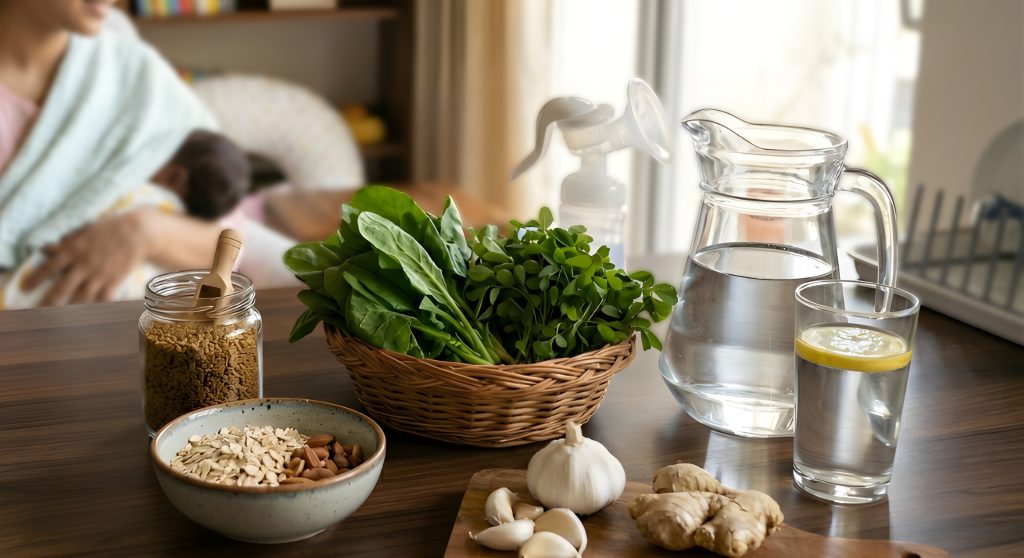
While no specific food is proven to directly increase milk supply, a balanced and nutrient-rich diet supports overall postpartum recovery and general well-being, which in turn helps lactation. Some traditional foods are commonly included in breastfeeding diets across India and other cultures:
Oats: A wholesome source of iron and fibre that supports postpartum nutrition.
Fenugreek (methi) seeds: A traditional herb sometimes used in lactation diets, though clinical evidence is limited.
Leafy greens: Spinach, methi leaves, and moringa offer vitamins and minerals for postpartum recovery.
Garlic: A traditional ingredient in many cuisines that adds nutritional value to meals.
Nuts and seeds: Almonds, walnuts, and sesame seeds offer healthy fats and protein.
Fennel seeds (saunf): A traditional herb included in many postpartum diets
These foods are not a substitute for frequent feeding and effective milk removal, which remain the primary drivers of milk supply. Responses vary from mother to mother. Introduce new foods gradually and check with your doctor for allergies or health conditions.
Also Read Postpartum Diet: Food to eat after delivery
Lifestyle Changes That Improve Breastmilk Production
Sometimes, how to naturally increase breast milk has more to do with lifestyle than diet. Rest, hydration, and emotional well-being support lactation. Helpful habits include:
- Drinking water, milk, soups, and warm fluids through the day
- Resting whenever your baby sleeps
- Calming activities like deep breathing or stretching
- Asking family for help with chores so you can focus on feeding
- Avoiding tight or ill-fitting bras, which can sometimes contribute to blocked ducts
Also Read What is postpartum depression? What are their symptoms and causes?
When to Seek Medical Help
While many cases improve with home care, certain signs need professional guidance. Speak with a doctor or lactation consultant if your baby isn’t gaining weight, has fewer than 6 wet nappies in 24 hours, seems unsettled after feeds, or if nursing is severely painful.
You can also consult an expert through PregaNews Ask a Gynae for personalised guidance. Supplementing with formula when medically advised is okay. Choosing what’s safest for your baby is never a failure.
Myths About Increasing Breastmilk
When learning how to increase supply of breast milk, you may come across well-meaning advice that isn’t always accurate. Let’s clear up a few common myths.
- Small breasts produce less milk. Breast size has little to do with supply. Production depends on milk-making tissue.
- You must drink milk to make milk. Hydration matters, but you don’t need dairy specifically.
- One missed feed will ruin your supply. An occasional missed feed usually won’t cause lasting issues.
Conclusion
Low milk supply can feel discouraging, but with patience and gentle care, it often improves. Knowing how to increase breastmilk through frequent feeding, balanced nutrition, hydration, and rest helps you feel in control. You’re doing the work.
Frequently Asked Questions
Q. How to increase breastmilk supply quickly?
Frequent feeding (8 to 12 times in 24 hours), pumping between sessions, hydration, and rest are the most effective ways to improve supply within days.
Q. How to increase breast milk naturally at home?
Nurse often, Breast compressions, eat lactation-friendly foods like oats and leafy greens, drink enough fluids, and practise skin-to-skin contact with your baby.
Q. Which foods help increase breast milk supply?
Oats, fenugreek seeds, leafy greens, nuts, garlic, and fennel are commonly recommended. Introduce new foods gradually and check for allergies.
Q. How do I know if my breastmilk supply is low?
Genuine signs include fewer than 6 wet nappies in 24 hours, poor weight gain over a couple of weeks, or a baby who seems consistently unsettled after feeds.
Q. Can stress reduce breast milk supply?
Yes, stress and exhaustion may interfere with hormones that support lactation and affect the let-down reflex. Resting and asking for help can ease this.
Q. How often should I breastfeed to increase supply?
Aim to breastfeed 8 to 12 times in 24 hours, including night feeds, or whenever your baby shows hunger cues like rooting or sucking on hands.
Q. Is pumping necessary to increase breastmilk supply?
Pumping isn’t always necessary, but adding short pumping sessions between feeds can stimulate extra milk production, especially if your baby’s latch is weak.
Q. Why is my breast milk supply low?
Common causes include poor latch, infrequent feeding, postpartum stress, dehydration, delayed initiation of breastfeeding, and certain medications.
Q. How to increase breast milk after C-section?
Begin skin-to-skin contact and breastfeeding as soon as you feel comfortable, feed often, stay hydrated, and rest well. A lactation consultant can offer support.
Q. Can drinking water increase breast milk?
Hydration supports milk production, though excessive water won’t dramatically boost supply. Aim for 8 to 10 glasses a day.
Q. How long does it take to increase milk supply?
With consistent feeding and care, mothers often see improvement within a few days to a couple of weeks.
Q. What drinks help increase breast milk?
Water is best, alongside warm fluids like soups, milk, and traditional lactation teas with fennel or fenugreek. Limit caffeine, as too much may affect your baby.
Medical Claims & Source Links Table
| Blog Section | Medical Claim | Link |
| Introduction | Most cases of low milk supply are temporary and can be improved naturally, with mothers typically seeing changes within a few days to a few weeks depending on the underlying cause and intervention | https://www.webmd.com/parenting/baby/ss/slideshow-increase-milk-supply |
| Introduction | Frequent breast stimulation signals the body to make more milk; the more your baby nurses, the more milk your body makes | https://www.webmd.com/baby/how-to-increase-your-milk-supply |
| What is Low Breastmilk Supply | Lactation works on a supply-and-demand principle: the more often a baby feeds, the more milk the body produces | https://my.clevelandclinic.org/health/diseases/galactagogues-low-milk-supply |
| What is Low Breastmilk Supply | After the first week, a well-fed baby should have at least 6 wet nappies in 24 hours; fewer wet nappies indicates inadequate intake | https://www.nhs.uk/baby/breastfeeding-and-bottle-feeding/breastfeeding-problems/enough-milk/ |
| What is Low Breastmilk Supply | Genuine low supply signs include poor weight gain over a couple of weeks and a baby who appears consistently unsettled after feeds | https://my.clevelandclinic.org/health/diseases/galactagogues-low-milk-supply |
| Common Causes of Low Breastmilk Supply | A poor or shallow latch leads to ineffective milk removal, which signals the body to produce less milk | https://www.webmd.com/baby/how-to-increase-your-milk-supply |
| Long gaps between feeds, fewer than 8 in 24 hours, reduce breast stimulation and milk production | ||
| Postpartum stress and exhaustion can interfere with hormones such as the let-down reflex, affecting milk supply | ||
| Adequate hydration is necessary for milk production, and severe dehydration can affect milk volume; however, drinking extra fluids beyond your normal needs does not increase supply on its own | ||
| Certain medications (antihistamines, decongestants, hormonal contraceptives containing estrogen) and underlying health conditions such as thyroid disorders, polycystic ovary syndrome (PCOS), retained placenta, or other hormonal imbalances can lower milk supply | ||
| How to Increase Breast Milk Naturally at Home | Newborns need to feed 8 to 12 times every 24 hours, including night feeds, to establish and maintain milk supply | https://www.mayoclinic.org/healthy-lifestyle/infant-and-toddler-health/in-depth/healthy-baby/art-20047741 |
| How to Increase Breast Milk Naturally at Home | Skin-to-skin contact stimulates oxytocin and prolactin release, hormones essential for milk production and let-down | https://www.webmd.com/parenting/psychological-benefits-of-breastfeeding |
| Proven Tips to Increase Breastmilk Supply | Following a baby’s feeding cues, rather than strictly switching breasts at set intervals, helps the body respond naturally to demand and supports a healthy supply | https://www.webmd.com/baby/how-to-increase-your-milk-supply |
| Pumping between feeds, including 15-minute sessions, helps boost milk demand and supply within several days of consistent practice | https://www.webmd.com/parenting/baby/ss/slideshow-increase-milk-supply | |
| Breast massage before feeding and breast compression during feeding help drain the breast more thoroughly and improve supply | https://www.uhhospitals.org/services/obgyn-womens-health/patient-resources/pregnancy-resources/breastfeeding-guide/breastfeeding-tips-to-increase-your-milk-supply | |
| Hunger cues such as rooting, hand-to-mouth movement, and lip smacking should guide feeding rather than the clock; crying is a late hunger cue | https://www.webmd.com/baby/cluster-feeding-what-is-it | |
| Cluster feeding in the late afternoon or evening is normal infant behaviour and helps build milk supply | ||
| Best Foods to Naturally Increase Breast Milk | Fenugreek (methi) is a traditional galactagogue that may support lactation in some mothers when taken in moderation | https://www.webmd.com/parenting/baby/ss/slideshow-increase-milk-supply |
| Best Foods to Naturally Increase Breast Milk | A balanced, varied diet rich in whole grains, fruits, vegetables, protein, and healthy fats supports milk production better than any single “magic” food | https://www.mayoclinic.org/healthy-lifestyle/infant-and-toddler-health/in-depth/breastfeeding-nutrition/art-20046912 |
| When to Seek Medical Help | Seek medical guidance if a baby isn’t gaining weight, has fewer than 6 wet nappies in 24 hours, or if nursing is severely painful | https://www.nhs.uk/baby/breastfeeding-and-bottle-feeding/breastfeeding-problems/enough-milk/ |
| FAQ -Breastfeeding After C-Section | Skin-to-skin contact and early breastfeeding can be initiated as soon as the mother is comfortable; lactation consultant support helps establish supply during recovery | https://www.webmd.com/baby/how-to-increase-your-milk-supply |
| FAQ – Drinks That Help Increase Breast Milk | Caffeine consumed by breastfeeding mothers may pass into breast milk and could affect a baby’s sleep or cause fussiness; intake should be limited | https://www.mayoclinic.org/healthy-lifestyle/infant-and-toddler-health/in-depth/breastfeeding-nutrition/art-20046912 |
| FAQ – How to increase breast milk naturally at home? | Nurse often, Breast compressions and practise skin-to-skin contact with your baby. | https://lllusa.org/increasing-milk-supply/ |
SHARE
















Leave a comment