










Best Time to Get Pregnant After Your Period: Complete Ovulation Calculator Guide
Trying to conceive can feel like a beautiful yet confusing journey, especially when you’re unsure about timing. Many women wonder when exactly the body is most receptive to pregnancy after a period ends. Understanding the best time to get pregnant after period is rooted in simple biology: an egg lives for only 12 to 24 hours after ovulation, while sperm can survive inside the reproductive tract for up to 5 days. This means timing intercourse correctly within your fertile window can meaningfully improve your chances of conceiving. With a little knowledge of your cycle, you can replace guesswork with patience and clarity.
What Is the Best Time to Get Pregnant After Period
The best time to get pregnant after period is the 6-day fertile window that includes the 5 days leading up to ovulation and the day of ovulation itself. During this window, your body is biologically prepared for conception. Because sperm can wait inside the reproductive tract for several days, having intercourse 2 to 3 days before ovulation is often just as effective as on the day itself. Knowing this window helps you plan with intention rather than rely on chance, giving you a realistic stretch of opportunity each cycle.
Understanding Your Menstrual Cycle for Pregnancy
Your menstrual cycle is divided into three main phases, and understanding each one can reveal a good time to get pregnant after your period.
- Follicular phase: Begins on day 1 of your period and continues until ovulation. The body prepares an egg for release.
- Ovulation phase: A mature egg is released from the ovary, typically around the middle of your cycle.
- Luteal phase: Lasts roughly 14 days after ovulation and ends with the start of your next period if conception hasn’t occurred.
Most healthy cycles last between 21 and 35 days, though it’s completely normal for your cycle length to vary by a few days from month to month. Tracking these phases over a few cycles gives you a clearer picture of when your body is most fertile.
When Do You Ovulate After Your Period
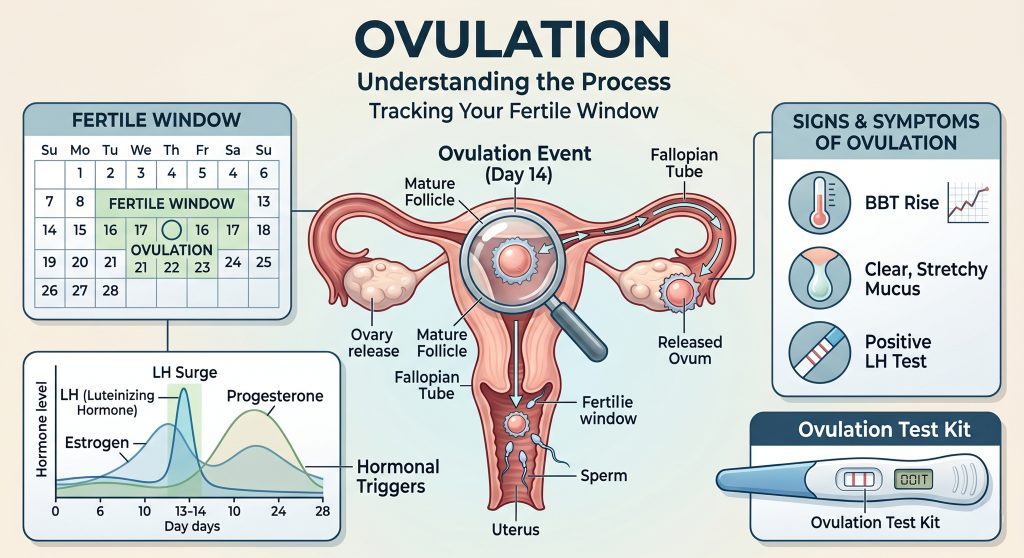
Ovulation typically occurs about 14 days before your next expected period, not 14 days after your last one. This subtle difference matters greatly because cycle lengths vary from woman to woman, and even from cycle to cycle for the same woman. For example, on a 28-day cycle, ovulation usually happens around day 14. On a 30-day cycle, it tends to fall around day 16. Women with shorter cycles may ovulate earlier, sometimes just a few days after bleeding stops. This is why generic calendar advice often misses the mark.
How to Calculate Your Fertile Window
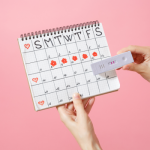
Calculating your fertile window is straightforward once you know your average cycle length. Count day 1 as the first day of your period.
- 28-day cycle: Ovulation around day 14; fertile window roughly days 9 to 14.
- 30-day cycle: Ovulation around day 16; fertile window roughly days 11 to 16.
- 32-day cycle: Ovulation around day 18; fertile window roughly days 13 to 18.
If your cycles are irregular or vary by more than 7 days, calendar math alone may not be reliable. In that case, paying close attention to physical signs of ovulation will give you a far clearer picture. Logging your cycle for 2 to 3 months also helps you spot a pattern you can trust.
Also Read Early Signs of Pregnancy to Look Out For
Use an Ovulation Calculator for Accuracy
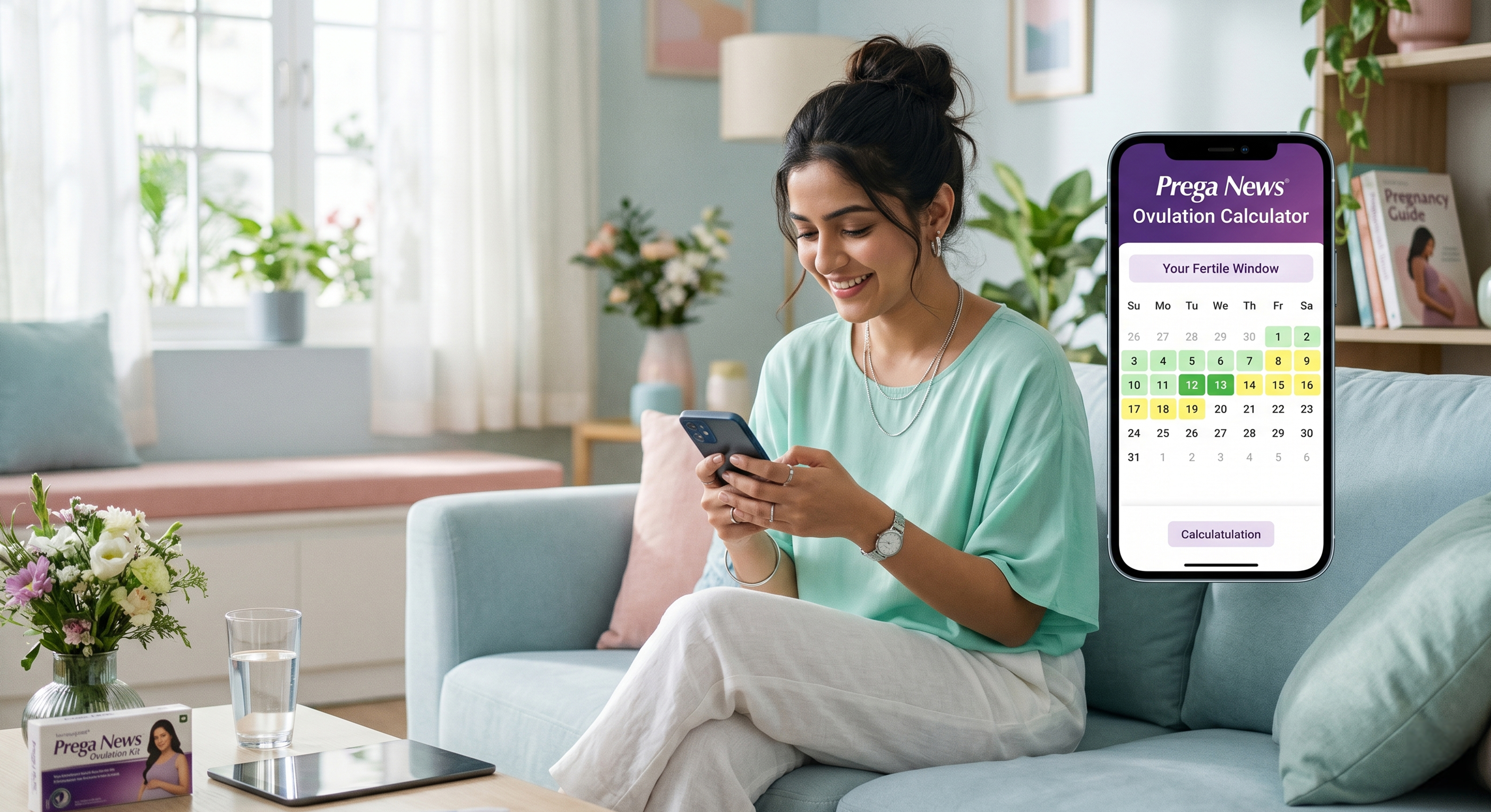
Manual cycle math can feel overwhelming, especially when you’re already managing the emotional ups and downs of trying to conceive. A digital tool can do the heavy lifting for you. The PregaNews Ovulation Calculator helps you estimate your most fertile days based on your cycle length and the start date of your last period. Within seconds, you receive a personalised window that highlights your peak fertility days.
It’s worth being honest about one thing: ovulation calculators provide estimates, not certainties. They work best for women with regular cycles and become less precise if your cycles vary widely. Think of the calculator as a smart starting point that points you to the right week, while body signs help confirm the exact day.
Signs of Ovulation You Should Watch
Your body often gives subtle signals when ovulation is approaching. Some signs are highly reliable, while others are gentle hints worth noting alongside the more dependable ones.
- Cervical mucus changes (most reliable): Discharge becomes clear, slippery, and stretchy, similar to raw egg white. This often appears 2 to 3 days before ovulation.
- LH surge detected by an ovulation kit (most reliable): A sharp rise in luteinising hormone confirms ovulation is likely within 24 to 36 hours.
- Basal body temperature rise (confirms after the fact): A slight increase of 0.3 to 0.5 degrees Celsius after ovulation has already occurred.
- Mild abdominal twinges: Some women feel a brief, one-sided cramp known as mittelschmerz.
- Increased libido and breast tenderness: Helpful supporting signs but vary widely between women.
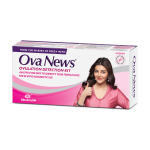
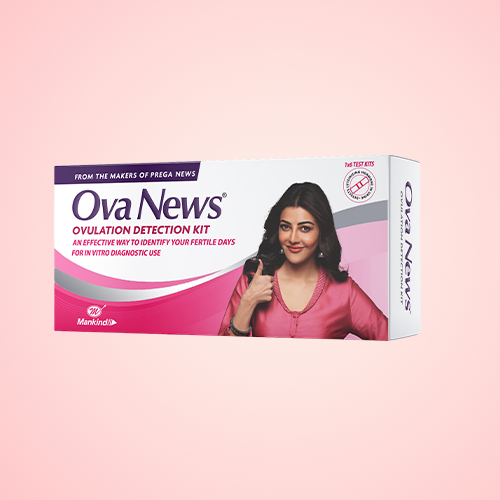
If your cycles are irregular and you’d like extra clarity on your peak fertile days, an ovulation detection kit such as Ova News can confirm the LH (Luteinising Hormone) surge in around 5 minutes.
Best Tips to Increase Chances of Pregnancy
Knowing the best time to conceive after period is half the battle. The other half lies in supporting your body, and your partner’s, through gentle, healthy habits. Here’s a practical plan you can follow this very cycle.
1. Start Tracking from Day 1 of Your Period
The day your period begins is day 1 of your cycle. From day 6 onwards, watch for cervical mucus changes. From around day 10, or 5 days before your earliest expected ovulation, begin noting body signs daily. This simple routine tells you when to act, without obsessing over the calendar.
2. Aim for Intercourse Every 2 to 3 Days Through Your Fertile Window
Couples often make the mistake of saving up for “the big day”. In reality, regular intercourse every 2 to 3 days from the end of your period through ovulation gives sperm the best chance of meeting the egg. This rhythm also keeps sperm count and quality healthy, which matters just as much as female timing.
3. Choose Fertility-Friendly Products
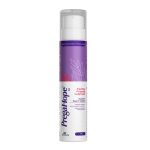
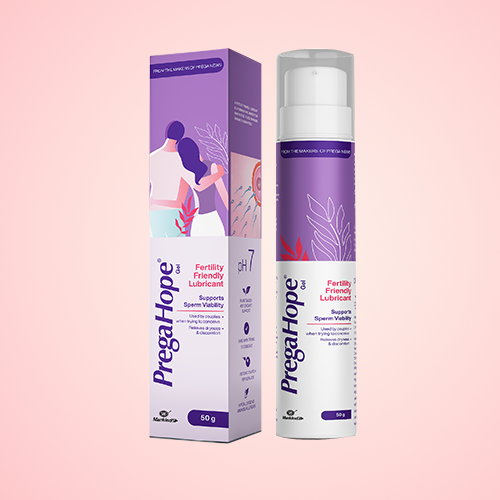
Many regular lubricants can interfere with sperm movement without you realising it. If dryness is a concern, choosing a sperm-friendly option like Prega Hope Gel, which is pH-balanced to match fertile fluid, helps keep intimacy comfortable while supporting sperm motility.
4. Support Both Partners with Healthy Habits
Conception involves two people. Encourage your partner to avoid excessive heat (hot tubs, laptops on the lap), limit alcohol, eat a balanced diet rich in zinc and antioxidants, and get adequate sleep. Sperm takes about 70 to 90 days to mature, so lifestyle changes today benefit fertility a few months down the line.
5. Nourish Your Body and Mind
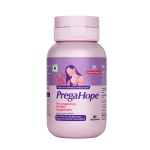
Folic acid, iron, and zinc play important roles in conception and the earliest weeks of pregnancy, often before you even know you’ve conceived. A daily prenatal supplement helps cover any nutritional gaps. Equally important is managing stress, since high cortisol levels can disrupt ovulation. Gentle yoga, meditation, and 7 to 9 hours of quality sleep genuinely make a difference.
Can You Get Pregnant Right After Your Period
Yes, this is possible and is one of the most common myths worth busting. The best time after menstruation get pregnant depends entirely on your cycle length. If you have a short cycle of around 21 to 24 days, ovulation may occur just a few days after your period ends. Combined with sperm’s 5-day survival ability, intercourse during or right after your period could lead to pregnancy. This is why relying on the old “safe period” concept can be misleading, particularly for women with shorter or irregular cycles.
Common Mistakes Couples Make
Even with the best intentions, small missteps can delay conception. Being aware of them helps you avoid unnecessary frustration.
- Waiting only for the day of ovulation: This shortens your window. Begin trying a few days earlier.
- Stressing over exact dates: Anxiety itself can affect hormonal balance and may delay ovulation.
- Overlooking male fertility: Sperm health, lifestyle, and readiness for both partners matter equally.
- Using ordinary lubricants: Many can hinder sperm movement without you realising it.
- Skipping prenatal nutrition: Starting key vitamins after conception means missing important early benefits.
- Expecting calendar math to be exact: Apps and calculators offer estimates. Confirm with body signs.
When to Consult a Doctor
Most healthy couples conceive within a year of trying. However, professional guidance can help if you’ve been trying without success or if something about your cycle feels off. Consider consulting a doctor if:
- You’re under 35 and have been trying for over 12 months.
- You’re 35 or older and have been trying for 6 months.
- You have very irregular, absent, or unusually heavy periods.
- You’ve experienced repeated miscarriages.
- You suspect conditions like PCOS or thyroid issues.
- Your partner has known health concerns that may affect fertility.
If reaching out feels easier from home, the PregaNews Ask a Gynae service connects you with qualified specialists who can offer personalised guidance tailored to your situation.
Conclusion
Identifying the best time to get pregnant after period doesn’t have to feel like solving a puzzle. With a clear understanding of your cycle and gentle attention to your body’s signs, you can approach conception with calm and confidence. Be patient with yourself, and with your partner. Some cycles will feel hopeful, others may bring quiet disappointment, and both are part of the journey countless women walk every day. You’re not alone in this, and your body is doing remarkable work behind the scenes. When you feel ready, the PregaNews Ovulation Calculator is there to help you map your fertile days, one gentle step at a time.
Frequently Asked Questions
Q. What is the best time to get pregnant after period?
The 5 days leading up to ovulation and the day of ovulation itself form your fertile window. For most women with a 28-day cycle, this typically falls between days 9 and 14.
Q. Can I get pregnant immediately after my period?
Yes, especially if you have a short menstrual cycle of 21 to 24 days. In such cases, ovulation may occur soon after bleeding ends, making conception possible.
Q. How many days after period is safe to conceive?
“Safe to conceive” refers to your fertile window, which often starts around day 9 for a 28-day cycle. Tracking your cycle and ovulation signs helps you identify these days more accurately.
Q. What are the most fertile days after period?
The two days right before ovulation and the day of ovulation are considered most fertile. Intercourse during this 3-day stretch offers the highest chances of conception.
Q. How many days after period can you get pregnant?
Since sperm can survive up to 5 days inside the reproductive tract, intercourse in the days following your period can lead to pregnancy if ovulation occurs soon after.
Q. How to calculate ovulation after period?
Subtract 14 days from your expected next period date to estimate your ovulation day. Online tools like the PregaNews Ovulation Calculator can simplify this further.
Q. What are the signs of ovulation after menstruation?
Look for egg-white cervical mucus, mild one-sided pelvic pain, a slight rise in basal body temperature, and increased libido. These signs together help confirm your fertile days.
Medical Claims & Source Links
| Blog Section | Medical Claim | Link |
| Introduction | An egg lives for only 12 to 24 hours after ovulation, while sperm can survive inside the reproductive tract for up to 5 days | https://www.webmd.com/baby/am-i-ovulating |
| What Is the Best Time to Get Pregnant After Period | The fertile window is the 6-day stretch that includes the 5 days leading up to ovulation and the day of ovulation itself | https://www.acog.org/womens-health/experts-and-stories/the-latest/trying-to-get-pregnant-heres-when-to-have-sex |
| Having intercourse 2 to 3 days before ovulation is often just as effective as on the day itself | https://www.webmd.com/baby/healthtool-ovulation-calculator | |
| Understanding Your Menstrual Cycle for Pregnancy | The follicular phase begins on day 1 of the period and continues until ovulation; the luteal phase lasts roughly 14 days after ovulation | https://www.webmd.com/women/luteal-phase |
| Most healthy menstrual cycles last between 21 and 35 days | ||
| When Do You Ovulate After Your Period | Ovulation typically occurs about 14 days before the next expected period, not 14 days after the last one | https://crh.ucsf.edu/about-fertility/normal-menstrual-cycle |
| How to Calculate Your Fertile Window | On a 28-day cycle, ovulation typically occurs around day 14; on a 30-day cycle, around day 16 | https://www.webmd.com/baby/healthtool-ovulation-calculator |
| Signs of Ovulation You Should Watch | Cervical mucus becomes clear, slippery, and stretchy like raw egg white in the days leading up to ovulation | https://www.webmd.com/infertility-and-reproduction/fertility-tests-for-women |
| The LH surge detected by an ovulation kit confirms ovulation is likely within 24 to 36 hours | https://www.webmd.com/baby/am-i-ovulating | |
| Basal body temperature rises slightly (about 0.5 to 1 degree) after ovulation has occurred | https://my.clevelandclinic.org/health/articles/23439-ovulation | |
| Best Tips to Increase Chances of Pregnancy | Regular intercourse every 2 to 3 days during the fertile window provides the best chance of conception | https://www.webmd.com/baby/am-i-ovulating |
| Many regular lubricants can interfere with sperm motility; fertility-friendly options match the consistency and pH of fertile cervical fluid | https://www.webmd.com/infertility-and-reproduction/what-to-know-about-fertility-and-lubricants | |
| Sperm production takes about 70 to 90 days, so lifestyle changes today benefit fertility a few months later | https://www.mayoclinic.org/healthy-lifestyle/getting-pregnant/in-depth/fertility/art-20047584 | |
| Folic acid before and during pregnancy helps prevent birth defects of the brain and spinal cord | https://www.webmd.com/baby/folic-acid-and-pregnancy | |
| When to Consult a Doctor | Women under 35 should consult a doctor after 12 months of trying; women 35 or older after 6 months; PCOS is one of the most common causes of infertility | https://www.webmd.com/infertility-and-reproduction/irregular-periods-and-getting-pregnant |
SHARE












Leave a comment