






















What Is Chemical Pregnancy? Causes, Symptoms & Early Miscarriage Explained
The word “chemical” makes it sound as though the pregnancy was never quite real. It was. If you are asking what is chemical pregnancy, it is a very early miscarriage that usually happens by around five weeks, before a scan can detect anything. A test turns positive, the embryo stops developing, hormone levels fall, and bleeding arrives with a negative test. One such loss does not mean you cannot conceive.
What Is a Chemical Pregnancy
A chemical pregnancy is one that began and then ended within days of implantation, before it became visible on any scan. Learning that a positive test was followed by a loss is confusing and difficult, and understanding what happened often helps.
What Does Biochemical Pregnancy Mean
Biochemical pregnancy is the same thing under a different name. It’s called biochemical because the only proof of the pregnancy is chemical, meaning the hormone in your blood or urine.
There’s nothing yet for a scan to show, so hormones are all anyone has to go on.
When Does a Chemical Pregnancy Occur
These losses usually happen by about the fifth week, often around the time your period would have been due. That’s why so many go unnoticed. Home tests can now detect pregnancy hormones before a missed period, so more women learn of a pregnancy they might once never have known about.
How Does a Chemical Pregnancy Happen
Fertilisation and Implantation
After an egg is fertilised, it travels down the fallopian tube and settles into the lining of your uterus. That settling in is called implantation, when your body starts behaving as though you’re pregnant.
hCG Production and Pregnancy Tests
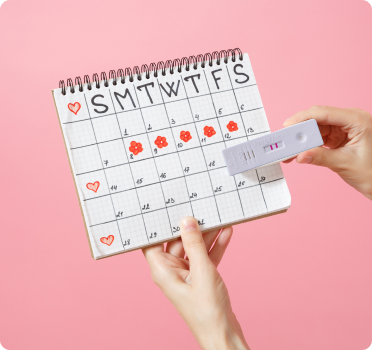
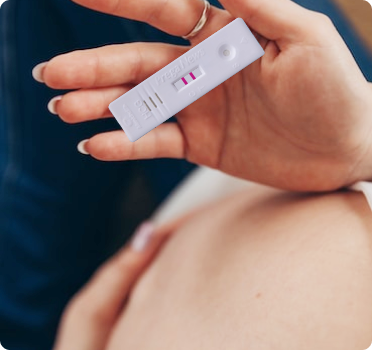
That signal is hCG (Human Chorionic Gonadotropin), the pregnancy hormone. A home test looks for hCG in your urine and shows a second line once there’s enough of it.
The Prega News Pregnancy Test Kit is 99% accurate and gives a result in 5 minutes, which is why an early positive can appear before a scan would show anything.
What Happens When the Pregnancy Stops Developing
The embryo stops growing shortly after implantation, and hCG falls instead of doubling. Because the hormone is still in your bloodstream, a test may keep reading positive for a while. That’s the cruellest part of the timing.
How Common Is a Chemical Pregnancy
More common than most women realise. Around 1 in 4 pregnancies end within the first 20 weeks, and roughly 80% of those losses happen very early. No one can put an exact figure on them, because many happen before a woman ever tests. If this happened to you, you’re in very large company.
Also Read – How Much Bleeding Is Normal in Early Pregnancy? Signs, Causes & When to See a Doctor
What Causes a Chemical Pregnancy
If you’re wondering what is the cause of chemical pregnancy, the honest answer is that it’s rarely traced to one identifiable thing in any individual case.
Chromosomal Abnormalities
The most likely cause is a chromosomal problem in the embryo, meaning the genetic instructions were incomplete from the start. These are usually random, one-off events. They aren’t inherited, and they don’t tend to repeat.
Other Factors Associated With Early Pregnancy Loss
Some factors are associated with a higher chance of early loss:
- Being 35 or older
- An irregularly shaped uterus
- Hormone levels that are too high or too low
- Thyroid conditions, diabetes or PCOS (Polycystic Ovary Syndrome)
- An untreated sexually transmitted infection
Sometimes the womb lining hasn’t developed in the right way at the right time, so the embryo can’t embed properly.
Can Stress Cause a Chemical Pregnancy?
Research here is mixed. Some studies have found a link between sustained psychological stress and a higher risk of miscarriage. Obstetric guidance holds that early loss is usually random and rarely traceable to any single stressful episode. What the evidence does not support is blaming a difficult week for a particular loss. Managing stress is worth doing for your own wellbeing, not as insurance.
Is a Chemical Pregnancy Something You Caused?
No. Not the tea you drank, the flight you took, or the day you lifted something heavy. Early loss is usually decided by chromosomes before you even knew you had conceived.
What Are the Symptoms of a Chemical Pregnancy?
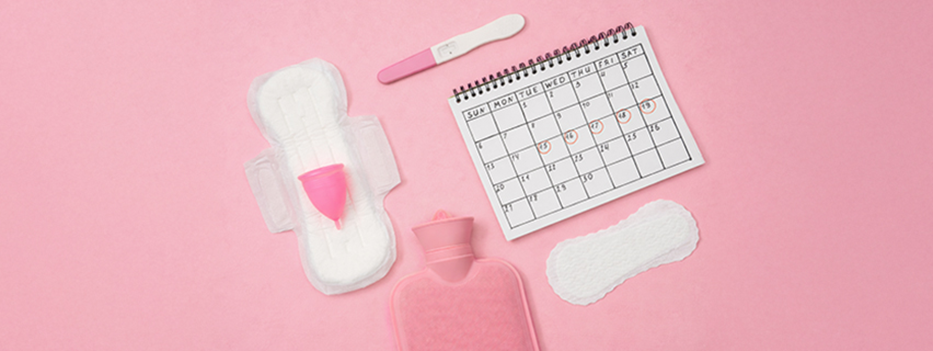
Symptoms can be so mild that many women notice nothing at all. When there are signs, they may include:
- A positive pregnancy test followed by a negative one soon after
- A period that arrives about a week later than usual
- Bleeding that’s heavier than your normal period
- Cramping that feels more intense than usual
- A positive test without the usual early pregnancy symptoms
- Spotting in the week before your period is due
What Does Chemical Pregnancy Bleeding Look Like?
Chemical Pregnancy Bleeding vs Normal Period
For many women it looks like a period, perhaps a little heavier, with stronger cramps. Some find it begins as light spotting and then turns heavy, sometimes with clots. Others notice no difference at all from a usual month.
How Long Does Bleeding Last?
It varies. Passing the pregnancy tissue can take several days, and for some women a couple of weeks. If bleeding continues well beyond your usual pattern, mention it to your doctor.
When Is Bleeding a Medical Emergency?
Most of the time this bleeding is manageable at home. That is worth knowing. But please seek urgent medical care if you have:
- Heavy bleeding that soaks through a pad quickly
- Severe tummy pain that stops you focusing on ordinary tasks
- Pain at the tip of your shoulder, which can signal an ectopic pregnancy
- Feeling sick, faint or close to losing consciousness

Chemical Pregnancy vs Miscarriage: What’s the Difference?
A chemical pregnancy is a type of miscarriage, not a separate event. The difference is timing and what can be seen.
| Chemical Pregnancy | Later Miscarriage | |
| Timing | Usually by about 5 weeks | After a pregnancy can be seen on a scan |
| Confirmed by | Hormone tests only | Ultrasound |
| Bleeding | Often like a heavier period | Often heavier, with stronger cramping |
| Treatment | Usually none needed | May need medical care |
Chemical Pregnancy vs False Positive Pregnancy Test
These are not the same. A false positive means you were never pregnant. A chemical pregnancy means you were: your body produced hCG because an embryo had implanted. The test was telling the truth at the moment you took it.
Also Read – Evaporation Line on a Pregnancy Test: What It Means & How to Identify It
How Is a Chemical Pregnancy Diagnosed?
hCG Blood Tests
To understand what’s happening, your doctor may suggest a blood test, which measures hCG far more precisely than a home test can. One reading shows where your level is now.
Repeat hCG Testing
A second test a couple of days later shows the direction of travel. In a continuing pregnancy the level climbs. After a chemical pregnancy it falls steadily, often by around a third to a half every couple of days, though the exact rate varies.
Role of Ultrasound
A scan is used mainly to rule things out, since it’s usually too early to see anything. Your doctor may still suggest one.
Can You Confirm a Chemical Pregnancy at Home?
Not with certainty. A home test may keep showing a faint positive while hormone levels are dropping. If your result has changed and you’ve started bleeding, a doctor can tell you what happened.
Is There Treatment for a Chemical Pregnancy?
There’s no treatment for a chemical pregnancy, and the body usually completes the process on its own without any procedure.
That can be a hard thing to hear. It also means there was no missed window, no test you should have taken sooner, and no decision you got wrong. Nothing you did caused this, and nothing could have stopped it. For most women, the next cycle begins much as usual.
Can You Get Pregnant After a Chemical Pregnancy?
When Can You Ovulate Again?
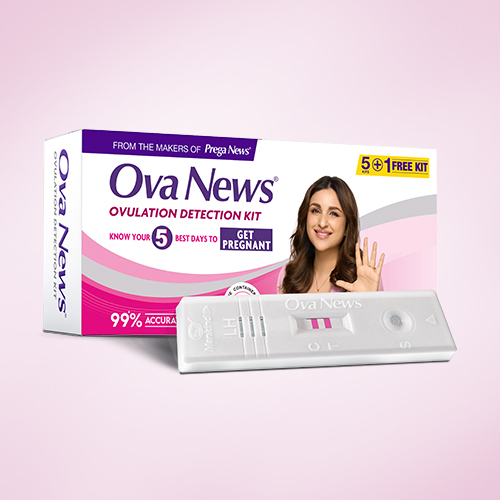
Ovulation can return within a few weeks, sometimes as early as two, though this varies a lot between women. The Ova News ovulation detection kit identifies your 5 most fertile days with results in 5 minutes, and our ovulation calculator can help you track the cycle.
When Can You Try to Conceive Again?
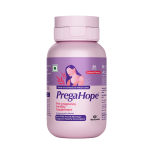
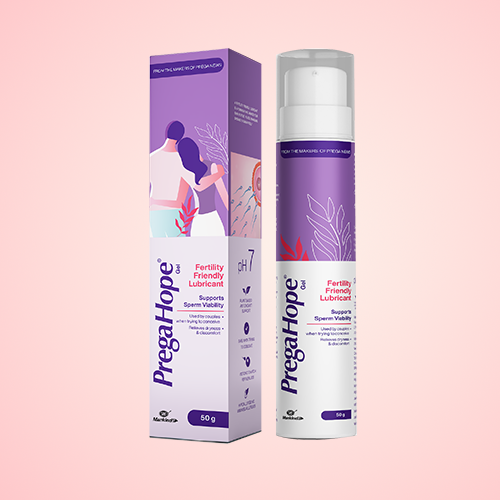
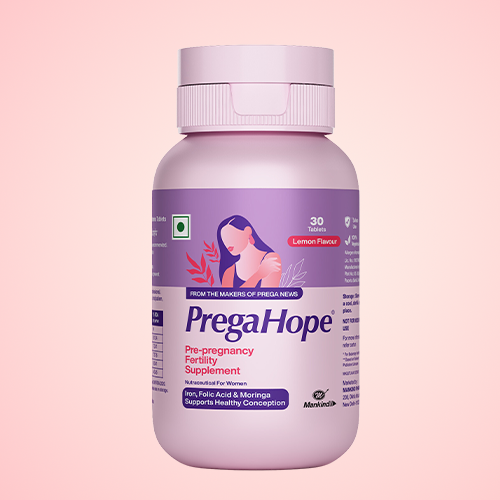
Physically, you can often try straight away. Doctors usually suggest waiting until after your next period so that dating a future pregnancy is simpler. Emotionally, take whatever time you need. Many use that cycle to build up nutrients with a supplement such as Prega Hope, which contains folic acid and iron.
Does a Chemical Pregnancy Affect Future Fertility?
One early loss isn’t considered a sign of infertility. Conception did take place, and doctors often read that as an encouraging sign. Most women who experience a chemical pregnancy go on to have healthy pregnancies.
What If You Have Repeated Chemical Pregnancies?
When to See a Fertility Specialist
UK guidance from the Royal College of Obstetricians and Gynaecologists defines recurrent miscarriage as three or more first trimester losses. Doctors may start investigating after two, particularly if you’re over 35 or something specific concerns them.
What Tests Might a Doctor Consider?
Depending on your history, a doctor may consider antiphospholipid antibody testing (a check for a clotting-related immune condition), thyroid function tests, a pelvic ultrasound to look at the shape of your uterus, and sometimes karyotyping (a study of you and your partner’s chromosomes). Answers can help, though they rarely arrive as quickly as the feelings do.
Emotional Impact of a Chemical Pregnancy
There’s no correct way to feel about this. Some grieve deeply for a pregnancy that lasted days. Others feel numb, or relieved, or find their reaction shifts week to week. All of it is valid. If the sadness isn’t lifting, speaking to a counsellor or your doctor is a reasonable step, not an overreaction.
When Should You See a Doctor?
While an early loss often resolves on its own, some situations need medical attention. Please consult your healthcare provider if you experience:
- Bleeding much heavier than a usual period, or that doesn’t settle
- Severe or one-sided abdominal pain
- Fever, chills or unusual discharge
- Two or more early losses
- Any symptom that affects your daily life or worries you
You can also ask a gynaecologist for guidance on what to check next.
Key Takeaways
A chemical pregnancy is a real pregnancy loss, usually before five weeks, most often caused by a random chromosomal issue that nobody could have prevented. Hormone levels fall quickly, which is why a positive test turns negative. Bleeding is usually period-like, though heavy bleeding with severe pain needs urgent care. When you feel ready to try again, a pregnancy test kit will be there when you need it.
The information provided here is for educational purposes only and should not replace professional medical advice. Please consult your gynaecologist or healthcare provider for any health concerns.
Frequently Asked Questions
Q. What is a chemical pregnancy?
A chemical pregnancy is a very early miscarriage, usually happening by around five weeks. It occurs after the embryo has implanted but before the pregnancy can be seen on an ultrasound scan, so the only evidence of it is the pregnancy hormone hCG. Many women only realise it happened because a positive test later turned negative.
Q. What causes a chemical pregnancy?
Most chemical pregnancies are caused by a random chromosomal problem in the embryo, meaning it could not develop from the start. Occasionally the womb lining hasn’t developed in the right way at the right time, so the embryo can’t embed properly. These causes are almost never something the mother did or could have prevented.
Q. What are the signs of a chemical pregnancy?
A positive test followed by a negative one, a late period, heavier bleeding, or stronger cramps. Some women have no signs at all.
Q. How early can a chemical pregnancy happen?
Usually within the first five weeks, often around the time your period was due.
Q. What does chemical pregnancy bleeding look like?
Often like a slightly heavier period. It may start as spotting and then become heavier, sometimes with small clots.
Q. How long does bleeding last after a chemical pregnancy?
It varies. Passing the tissue may take a few days, and for some women a couple of weeks.
Q. Can stress cause a chemical pregnancy?
Evidence is mixed, and guidance holds that early loss is usually random. What it does not support is blaming one difficult week for your loss.
Q. Can a chemical pregnancy show up on a pregnancy test?
Yes. The embryo produces hCG after implantation, so a test can read positive before hormone levels fall.
Q. Can a chemical pregnancy be seen on an ultrasound?
Usually not. The loss happens before there’s anything for a scan to show, which is why hormone tests are used instead.
Q. Can you get pregnant after a chemical pregnancy?
Yes. Most women who have one go on to have healthy pregnancies, and fertility isn’t usually affected.
Q. How soon can you try to conceive after a chemical pregnancy?
Ovulation can return within a few weeks. Doctors often suggest waiting until after your next period so dating is easier.
Q. Does one chemical pregnancy mean I have fertility problems?
No. A single early loss isn’t considered a sign of infertility, and conception itself is an encouraging sign.
Q. What happens to hCG after a chemical pregnancy?
It falls steadily, often by around a third to a half every couple of days, until a test reads negative again.
Q. When should I see a doctor after a chemical pregnancy?
If bleeding is very heavy, pain is severe, you develop a fever, or you’ve had two or more early losses.
MEDICAL CLAIMS & SOURCE LINKS
| Blog Section | Medical Claim | Link |
| What Is a Chemical Pregnancy | Biochemical pregnancy loss is a pregnancy loss diagnosed entirely on decreasing hCG levels, where the pregnancy was never visualised on ultrasound | https://pmc.ncbi.nlm.nih.gov/articles/PMC6276652/ |
| How Common Is a Chemical Pregnancy | Twenty-five per cent of biochemically detected pregnancies ended within six weeks of the last menstrual period, and nearly all of these losses were clinically unrecognised | https://pubmed.ncbi.nlm.nih.gov/2078614/ |
| What Causes a Chemical Pregnancy | Approximately 50% of early pregnancy losses are due to foetal chromosomal abnormalities; early pregnancy loss occurs in 10% of clinically recognised pregnancies, around 80% within the first trimester | https://www.acog.org/clinical/clinical-guidance/practice-bulletin/articles/2018/11/early-pregnancy-loss |
| What Causes a Chemical Pregnancy | Advanced maternal age and a prior early pregnancy loss are the most commonly identified risk factors for early pregnancy loss | https://www.acog.org/clinical/clinical-guidance/practice-bulletin/articles/2018/11/early-pregnancy-loss |
| What Causes a Chemical Pregnancy | Where the uterine lining fails to become receptive at the right point in the cycle, the result may be implantation failure or early pregnancy loss | https://www.ncbi.nlm.nih.gov/books/NBK587449/ |
| How Is a Chemical Pregnancy Diagnosed? | The rate of hCG decline in spontaneous abortion follows a quadratic profile, falling faster from higher starting levels; a decline slower than 21% over two days suggests retained tissue or ectopic pregnancy | https://pubmed.ncbi.nlm.nih.gov/15516387/ |
| How Is a Chemical Pregnancy Diagnosed? | For a pregnancy of unknown location, serial serum hCG measurements are used, with transvaginal ultrasound offered to determine the location of the pregnancy | https://www.nice.org.uk/guidance/ng126/chapter/recommendations |
| Is There Treatment for a Chemical Pregnancy? | Expectant management for 7 to 14 days is the first-line strategy for confirmed miscarriage, and most women will need no further treatment | https://www.nice.org.uk/guidance/ng126/chapter/Management-of-miscarriage |
| What Does Chemical Pregnancy Bleeding Look Like? | Heavy red bleeding that soaks a period pad, or severe tummy pain, requires emergency medical attention in early pregnancy | https://www.nhs.uk/conditions/miscarriage/symptoms/ |
| What Does Chemical Pregnancy Bleeding Look Like? | Shoulder-tip pain can indicate an ectopic pregnancy causing internal bleeding and needs medical advice straight away | https://www.nhs.uk/conditions/ectopic-pregnancy/symptoms/ |
| When Should You See a Doctor? | Contact the hospital immediately if bleeding becomes particularly heavy, a high temperature develops, or severe pain occurs; also if bleeding, pelvic pain or fever persist beyond three weeks with a negative test | https://www.nhs.uk/conditions/miscarriage/what-happens/ |
| What If You Have Repeated Chemical Pregnancies? | Three or more miscarriages in a row is recurrent miscarriage, after which further tests including parental karyotyping are often used | https://www.nhs.uk/conditions/miscarriage/diagnosis/ |
| What If You Have Repeated Chemical Pregnancies? | Antiphospholipid antibody testing is a core investigation in the evaluation of recurrent pregnancy loss | https://www.ncbi.nlm.nih.gov/pmc/articles/PMC12097438/ |
| Can You Get Pregnant After a Chemical Pregnancy? | Conceiving before the first menstrual period following a spontaneous miscarriage is not associated with adverse maternal or neonatal outcomes | https://pubmed.ncbi.nlm.nih.gov/32883452/ |
| Chemical Pregnancy vs False Positive Pregnancy Test | A chemical pregnancy is a genuine very early pregnancy loss rather than an inaccurate test result, and does not affect long-term fertility | https://www.healthline.com/health/pregnancy/chemical-pregnancy |
SHARE
















Leave a comment